Thursday, March 31, 2011

Interview with Author Bradley P. Beaulieu

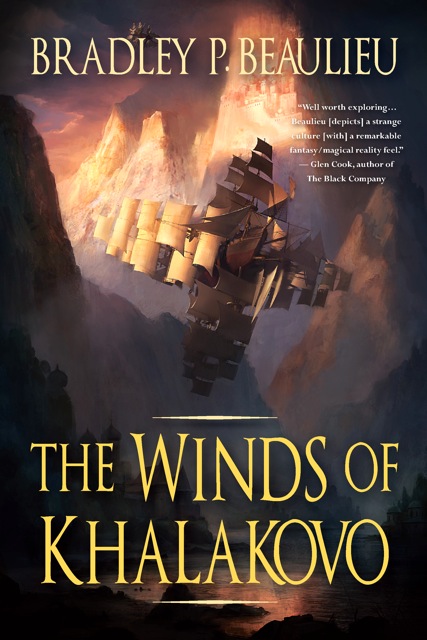
WindsofKhalakovo_TP_Cover_r4.jpeg


I’m pleased to interview my great friend and writer buddy, Brad Beaulieu. We’ll be discussing his new novel,
The Winds of Khalakovo, Book One of the Lays of Anuskaya, which comes out the first of April 2011 from Nightshade Books as a trade paperback and as an eBook. Winds is a sweeping epic fantasy with a Czarist Russian and Persian feel, a unique combination to be sure. I’m so proud of Brad’s accomplishment with the world building and the story. I’ve been involved with this novel for several years now, and have had a part in the revisions, so I’ve seen it go from an awesome book with an amazing concept to a truly exceptional one with a fully fleshed out world.

Brad has had his short stories published in the most prestigious speculative fiction publications including Realms of Fantasy, The Intergalactic Medicine Show, Writers of the Future, and several anthologies from DAW Books. He’s also the father of two and the husband to a wonderful woman, Joanne. They live in Wisconsin and besides being an excellent writer, Brad is an amazing cook.

Brad-Beaulieu-Wide-Shot.jpg
Photo of Author Bradley P. Beaulieu

Now onto the book . . .


The Winds of Khalakovo has been described as: George R. R. Martin’s Song of Ice and Fire meet Ursula Le Guin’s Earthsea in this sweeping epic fantasy filled with windships, elemental sprits, political intrigue and passion.


The reviews have been glowing and here are a few lines from a few of them:


“Elegantly crafted, refreshingly creative . . .”

–C.S. Friedman, bestselling author of The Coldfire Trilogy


The Winds of Khalokovo is filled with clean prose, intelligent language, and brilliant imagination. Reading this fantasy was like sinking my teeth into a rich and exotic dessert.

—Orson Scott Card's Intergalactic Medicine Show


Exactly the kind of fantasy I like to read.

—Kevin J. Anderson, New York Times bestselling author of The Saga of the Seven Suns


“The prose is often poetic . . . and the characters have welcome depth”

–Publisher’s Weekly


“Well worth exploring . . .”

–Glen Cook, bestselling author of The Black Company


The boldly imagined new world and sharply drawn characters will pull you into The Winds of Khalakovo and won't let you go until the last page. —Michael A. Stackpole, New York Times bestselling author of I, Jedi


The back cover says: Among inhospitable and unforgiving seas stands Khalakovo, a mountainous archipelago of seven islands, its prominent eyrie stretching a thousand feet into the sky. Serviced by windships bearing goods and dignitaries, Khalakovo’s eyrie stands at the crossroads of world trade. But all is not well in Khalakovo. Conflict has erupted between the ruling Landed, the indigenous Aramahn, and the fanatical Maharraht, and a wasting disease has grown rampant over the past decade. Now, Khalakovo is to play host to the Nine Dukes, a meeting which will weigh heavily upon Khalakovo’s future.

When an elemental spirit attacks an incoming windship, murdering the Grand Duke and his retinue, Prince Nikandr, heir to the scepter of Khalakovo, is tasked with finding the child prodigy believed to be behind the summoning. However, Nikandr discovers that the boy is an autistic savant who may hold the key to lifting the blight that has been sweeping the islands. Can the Dukes, thirsty for revenge, be held at bay? Can Khalakovo be saved? The elusive answer drifts upon the Winds of Khalakovo . . .


Now on to the interview . . .

Congratulations on Winds, Brad. You deserve the praise and acclaim so much, and I’m really happy for you.

Thanks so much, Paul. And thanks for having me for the interview. It’s a lot of fun talking about the book now that it’s out in the world.

For me, with writing, it’s all about the characters, and you’ve got three amazing characters in Winds who drive the plot. You’ve got Prince Nikandr Khalakovo, the main protagonist; Rehada, his Aramahn lover who is also a spy and worse; and Atiana Vostroma, Nikandr’s betrothed, who arrives to cement a much-needed political marriage. Why did you decide to use three characters, and which one did you have the most fun writing?

I actually started with only two: Nikandr and Atiana. I was telling the tale through the eyes of the Landed, the people that rule the islands. But what I found was that revealing other aspects of the story, particularly those that needed to be viewed through the eyes of the peaceful Aramahn, were too difficult to tell without another viewpoint. I was starting to perform all sorts of literary gyrations just to get those parts of the story onto the page, so adding a new character became the perfect solution.

I loved delving into all three characters for different reasons, but as for which one I had the most fun writing, it would have to be Nikandr. He was the one I identified with the most, partly because he was male, but also—and I’ll be frank here—I had a hell of a time writing the fight scenes. Although I don’t shy away from physical scenes with the female characters, Nikandr gets the lion’s share of them, and writing about windship battles, musket fire, and detailing the sword fights through Nikandr’s eyes was great fun.

What makes Prince Nikandr so interesting? Tell us about where he began as a character and who he became as you wrote the book.


One of my favorite things about the people of the Grand Duchy, especially those of royal blood, is that they value family above nearly everything else. Religion isn’t organized in the world of Erahm, but if the people of the Grand Duchy have any religion at all it is embodied in the notion that those that have come before care for those that come after. The term “the ancients” is used throughout the book, and it embodies this notion: that one’s ancestors seek to protect from beyond the grave.

I like to think that each of the Duchies embraces this notion, sometimes to the detriment of the Grand Duchy as a whole. They squabble with one another, they even fight, all with this notion of protecting their family. There are marriages between the royal families, and so loyalties that seem straightforward become complex when you consider where wives were raised, where their families come from and still live. Things get muddy quickly.

The thing I like about Nikandr is that in a way he is the embodiment of these ideals. He loves his family, and yet he wants to honor Atiana and his new family. And of course there is a major wrench thrown into the works in the form of Rehada—not only is she not of royal blood, she is one of the Aramahn.

Nikandr, like so many of the Landed people, struggles with the choices he is forced to make with respect to the political struggles that have been brewing, but also over what to do with the boy, Nasim. On the one hand, he thinks Nasim is someone who should be protected and who may come to help the Grand Duchy. On the other hand, there are clear indications that Nasim was involved with something terrible that happened on Khakovo’s shores.

It was a delicious mix to put Nikandr in. He’s the probably the least conflicted of the three main characters, but he has some very tough choices he has to make. This, in the end, is where I like characters to be. I want them to be in positions where the choices that lie before them are neither attractive nor clean.

Rehada, Nikandr’s Aramahn lover is my favorite character in the book. She’s a very conflicted character. She’s a courtesan, a mother, a spy, and worse. Plus she’s a wielder of powerful fire magic, a woman who can control fire elementals. How did you manage to craft such an intriguing character? How does she manage to sizzle on the page?
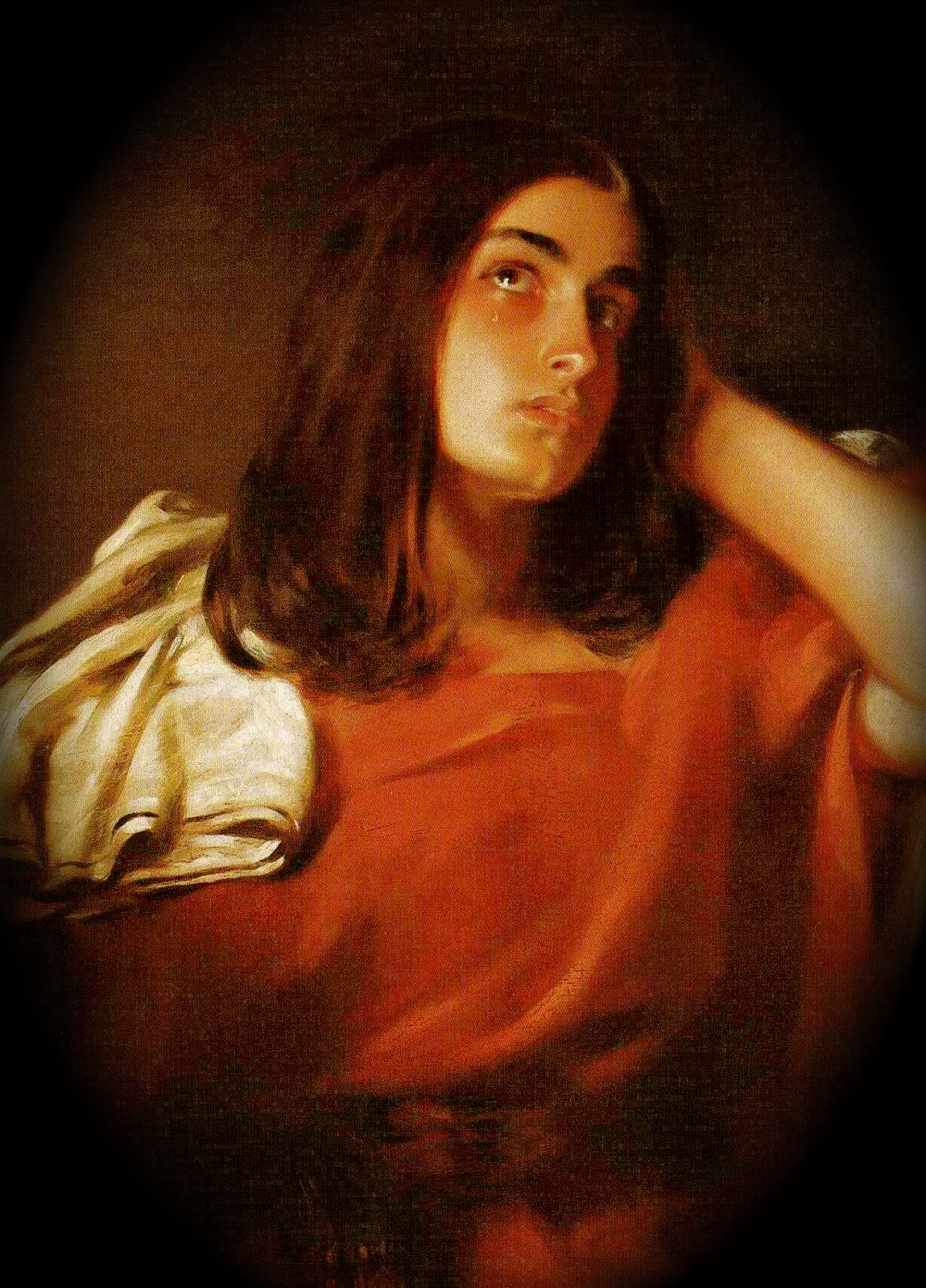
ANDREW-GEDDES-HAGAR1783-1844.jpg


While Nikandr is the character I identify with the most, I will admit that Rehada became my favorite character as well. Both her and Soroush. Why? Because they are complex, and they had the most surprises for me along the way. This has as much to do with their culture as it does them as characters. While I was brainstorming the world and the cultures of the Aramahn (who are peace-loving) and the Maharraht (a splinter group of the Aramahn who have forsaken their peace-loving ways to wage war on the Landed), I came to a crossroads. I couldn’t quite reconcile how the Maharraht could have drifted so far from one of the central tenets of their religion: do no harm to others.

The Aramahn and Maharraht, though they borrow greatly from Persian culture, draw more upon Buddhism for their religious beliefs. They believe in reincarnation and they strive for enlightenment—if not in this life, then hopefully the next. When I was looking at the artwork I was using to represent Rehada’s character, it occurred to me that the tear on her cheek came from some profound disappointment in herself. I continued working that thread, and I realized—it was one of those lightning bolt moments—that she was disappointed because she had betrayed her beliefs. It was from that single tear that the Maharraht were truly born. They see themselves as sacrificing themselves and their path to enlightenment so that the rest of their people—the Aramahn—won’t have to.

This, I think, is the primary reason Rehada leaps off the page. She’s very conflicted, and from that comes tension that’s hard to look away from.

Atiana, Nikandr’s betrothed turns out to be the biggest surprise of the novel for me. She ends up being such a strong character who makes tough decisions and owns them. I think it’s rare to have two incredibly strong female protagonists in a novel. Tell us about Atiana and tell us how her character evolved as you drafted the book.


Yeah, Atiana was a lot of fun as well. She’s a princess, one of three triplets, and she comes from a rather sheltered world. Her other two sisters have already been married away. She, the youngest by minutes, is being married to Nikandr to cement the increasingly strained relationship between the Anuskaya's two most powerful duchies. Shortly after arriving on Khalakovo for her impending marriage, she is thrust along with everyone else into the mystery surrounding the death of the Grand Duke. But Atiana wasn’t really ready for this. She’s unprepared for these challenges, so it was interesting for me to see her grow, to rise to the occasion.

She is also our link to the aether, the stuff that lies between the material and spiritual planes. She is asked to become a Matra, one who submerges herself into frigidly cold water to slip into a trancelike state and reach “the dark,” as it’s known. This was one of the most interesting aspects of the world, the ability of the landed women to navigate the dark to communicate over long distances and to keep a watchful eye on their Duchy for the presence of the Maharraht. And Atiana is the window through which we view that world-within-a-world. It was great fun writing those scenes, but even greater fun seeing Atiana blossom and rise above her role as “youngest.”

How did you psychologically handle the revisions to this book? It went through many different layers, and the beginning scenes changed so many times. How did you deal with all of this and how did you not go freaking insane?


Who says I didn’t go insane?

Seriously, though, I did go through a lot of changes and drafts. Not Pat Rothfuss numbers, mind you, but quite a few just the same. I’ve written larger books before, but this one was the largest by far, and it’s an indicator of how deep and wide the world is. I realized as I was starting to write just how much I loved the world and the characters, and I tried to be careful to keep my mind open to cool, new, exciting things that I could add to enrich it. I didn’t just grab anything that came to mind, but I did “try things on for size” quite often. If they fit, I kept them. If not, I tossed them. But it made for a story that changed fairly significantly from first to final draft.

By the third or fourth draft, I had a pretty good idea of what this story was. Things were grounded by then, so it was just a matter of polishing the story as much as I could before submitting.

Twelve-masted wind ships!? How did you come up with the idea for them? I love that they sail through the sky with the Aramahn controlling elemental wind spirits and the ships have masts poking out in four directions—not to mention the cannon and muskets. The book cover really captures the ship so well.


Well, the windships came while I was brainstorming the world itself. The Grand Duchy is comprised of nine archipelagos, each one of them a single Duchy. Centuries ago the only people that visited the miserably cold islands were the Aramahn, who traveled the world on simple skiffs. Eventually, though, the people of Yrstanla—the only large continent on the planet—followed the Aramahn. They adopted their ships, and modified them for their own use. They made them larger, more able to carry cargo and—eventually—weapons.

The skiffs of the Aramahn were more traditional “ships of the sky” that you see in classic literature. They had a hull and a single mast that the wind masters use to harness the winds and travel as they will. But I’d always been bothered by the larger flying ships modeled after the age of sail. The physics would never work, and so I found myself trying to find a new design, and it occurred to me that they would use sails in all directions, not just above. I have all sorts of things worked out as to how they work, like how the “rudder” captures the ley lines of the islands to align the ship a certain way, but my geek meter is starting to peg red, so I think I’ll quit while I’m ahead. For me, though, these ships were a neat twist on a familiar theme. I’m glad they made it onto the cover.

The climax of the novel builds to an amazing pitch. I greatly admire how it all came together. Did you spend forever figuring out how to put all of that together? How hard was constructing the ending?


Actually the ending was not nearly as hard as the middle. It’s not called the muddle in the middle for no reason. It’s somewhat easy to take the threads you’ve shown to the reader in the beginning and complicate them so that there are more. The story begins to expand like a point in time expanding to a “cone” of possibilities. The tough part comes when you have to start pulling those threads in. (Here the cone starts to draw in to more of a football shape.) You have to begin preparing for the end of the book pretty early on in the process or you’ll find that too many things are going too far afield. If you don’t watch it, you’ll have a gnarled mess of mismatched threads instead of a tapestry.

So as I do start to narrow the possibilities and point the story generally toward the end, it starts to resolve itself like an image in the mist. Then it’s just a matter of tying up all the threads. No easy thing, but it’s still easier than the middle. The middle can bite my ass.

Now, to the most important question: when is book two coming out and what is it called? Can you give us a teaser about it?


The second book is called The Straits of Galahesh. It begins five years after the events of The Winds of Khalakovo. I don’t want to get too spoilery, but I think it’s safe to talk about how the story widens. The islands of the Grand Duchy, where the events portrayed in Winds take place, are situated near a larger continent, the motherland of Yrstanla. The empire there that has been at peace with Anuskaya for generations. However, trouble begins brewing as the Empire sets its sights once again on the islands they once ruled.

The next book still takes place largely throughout the islands of the Grand Duchy, but we begin to explore the Empire and its peoples and customs. We also learn more about Nasim's mysterious past. In the third book, this trend continues. The story moves onto the mainland itself as the characters, once and for all, try to deal with the source of the blight and the terrible wasting disease.


Download the first fifteen chapters of The Winds of Khalakovo for free here, watch the book trailer and read some reviews, and enjoy riding the wind.

Here's a link to buy the book for only $14.99.


Winds Banner - Lg.jpg


Thursday, March 17, 2011

Free eBook Give-a-way

Slide1.jpg


Today is the Lucky Leprechaun Book Giveaway Hop. It will last from March 17 - 20 at midnight and you can easily win free e-books.

March is officially e-book month and I'm participating in an e-book giveaway with many other authors with 24 e-books to choose from. And you're not limited to just one, either. Go to Linda Weaver's blog and tell her which books you're interested in--list as many as you like. You can learn more about each book by visiting the author's websites, which are listed on Linda's site.

There are Children’s, Fantasy, Mystery/Adventure, Non-fiction, science fiction, and Romance - inspirational, suspense, or comedy romances!

To win some books, leave a comment at:

http://lindaweaverclarke.blogspot.com

Winners will be drawn at midnight on March 20.

I'm offering up a couple of books, though only one is listed on Linda's site. You can get a copy of both my novelette, The Pirate Witch, and my new anthology The Crimson Pact Volume 1.


Title of the Novelette: The Pirate Witch

Genre: Fantasy

Synopsis: Maeve Tierney, the pirate witch, must escape from Captain Coyle, who wants her head, because she knows where the Queen's Ransom treasure is buried.


Title of the Book: The Crimson Pact

Synopsis: The Crimson Pact vowed to destroy the demons of the Rusted Vale . . . but the demons had their own secret plan and escaped, invading dozens of worlds . . . . Read 26 stories set in those many different worlds about the men and women who have refused to let the demons win. It also features an exclusive story by New York Times Bestselling author Larry Correia.

GargoyleFinal666.jpg

Sunday, March 13, 2011

Fun Urban Fantasy Romp

Dead Waters (Simon Canderous, #4)Dead Waters by Anton Strout

My rating: 5 of 5 stars


Dead Waters by Anton Strout is the best of the series so far. Strout’s comedic writing style has matured, though his main character still has a ways to go, which is part of the fun. Simon is a wise-cracking machine—and a zombie skull crushing machine, with his telescoping metal bat. Add in his psychometry powers, he can tell an object’s history by touching it, and you have a very fascinating character.

I really enjoyed this book was surprised at all the twists and turns as the murder investigation unfolded. The interaction between Simon and his girlfriend, Jane was highly entertaining. The side characters delivered as well, plus this book had crazy mythology, ass kicking, romance, and during the finale, the most unique use of a Ghostbusters lunch box ever.

For a fun urban fantasy romp, take a dip into Dead Waters, just watch out for the floating zombies . . . they’ll bite your ankles off.

Paul Genesse
Editor The Crimson Pact anthology

www.thecrimsonpact.com


View all my reviews

Thursday, March 10, 2011

Top 25 Novels for Steampunk Aficianados


Hello,

I came across this link to the "Top 25 novels for Steampunk Aficianados", Here's the link: (http://www.onlineclasses.org/2011/03/06/top-25-novels-for-steampunk-aficianados/).

I would also recommend the Steampunk anthology edited by Anne Vandermeer.

Enjoy,

Paul Genesse
Author of The Nubian Queen in Steampunk'd by DAW Books

Tuesday, February 22, 2011

Dead Waters is out!

DeadWaters.jpg

Today is the day to dive in! Dead Waters by Anton Strout is out. These books are hilarious, kind of Jim Butcher Lite. Who wouldn't want to work for the DEA? Not the drug enforcement agency, silly the Department of Extraordinary Affairs. They put the "fun" in underfunded.

I've really enjoyed the Simon Canderous books and Dead Waters is a good one to start with.

In my final analysis, I think Strout is made of funny juice.

Paul Genesse
Author of Revenge of the Little Match Girl
in Terribly Twisted Tales from DAW Books

Saturday, February 19, 2011

Plotstorming From Character

Plotstorming from Character

Notes for my presentation at Life, The Universe, and Everything 2011


I gave a 50 minute presentation at LTUE at BYU on creating plots from the creation of a character. It was standing room only and I think it went extremely well. Below you’ll find my notes and such. These don’t do great justice to the presentation, but they help a little.

Plotstorming from Character: In some cases the plot of a book drives the characters. However, characters that instead drive the plot can make for a more compelling story. We’ll focus on how to grow your plot from your main character.

Characters are the most important element in fiction. We don’t remember the plots of our favorite novels that well, but we remember the characters.

Writers who are good at plot write good books. Writers who are good at characterization have great careers.

Read Mike Stackpoles books and his “Secrets” newsletters.
Kij Johnson is an amazing teacher as well.

Read James N. Frey’s book, How to Write A Damn Good Novel. He discusses character a lot and how characters are not Homo Sapiens, but are Homo Fictus.
Not quite real, but more exaggerated in some way.

When writing a story or novel, start with a character.

Specifically, start with a name. Use phone books, baby name books, online resources, or my favorite book, People’s Names by Holly Ingram.

Then think of three special/positive things about your character.
Now think of three negative things about your character.
This step alone with create a lot of plot.

{Here’s a quick summary of what we discussed)
Our character, Olivia (Livey) is six years old, but she’s a genius, a musical prodigy who plays the guitar and many instruments. She’s in 4th grade, and the 10 year olds (4 years older than her) pick on her a lot and she has no friends. She is also not great at social interactions, but her master plan is to take over the class—her father suggested that she seek out the biggest kid in the class and beat them up. This will allow her to take over. Of course it goes badly and the biggest kid breaks her hand—with Livey’s guitar! (Also, Livey may be allergic to magic). Also, her mom, tells her to buck up and not worry about being picked on. No support from Mom and a stupid dad!

The goal is to beat the crap out of your character through the story, mercilessly. And then do it again. And again. Create empathy. Give them a big problem.

Write a bio from the characters point of view in their voice. Lie. Hide the scary things they can’t face. But at the bottom, write the truth.

Make a bible for each main character. Physical stats, history, age, family information and whatever else you can think of.

Remember, strong characters make decisions. They move the story and are not leaves in the wind. They decide where to go and what to do, and their decisions cause terrible things to happen to them, or cause other problems to be created.

To help figure out who your character really is figure out their true personality by using the 4 Temperaments and the Myers-Briggs personality test. Go to www.keirsey.com to learn more. The four are: Guardian, Artisan, Idealist, Rational.


(AJ Budrys, Scott Meredith)
Seven-element story structure:

1. Character in a
2. Context with a
3. Conflict
4. Tries to solve,
5. but fails until it reaches a (escalating cycle, until things are as bad as they can possibly be)
6. Climax, when she succeeds or fails
7. Resolves, (dénouement or validation)


The three basic stories of James Gunn, Robert Heinlein, and others:
1. Boy Meets Girl (Romeo and Juliet)
2. The Man Who Learned Better (Gran Turino)
3. The Clever Little Tailor (Indiana Jones)


Six Fundamental Conflicts of Aristotle:
1. Man against man
2. Man against nature
3. Man against himself
4. Man against society
5. Man against god
6. Man against machine

Six fundamental story types of Damon Knight
1. The story of resolution (the hero has a problem and solves it)
2. The story of revelation (something hidden is revealed)
3. The trick ending story (surprising twist)
4. The story of decision (ends in a decision, not necessarily action
5. The story of explanation (explains a mystery)
6. The story of solution (solves a puzzle)


Fantasy and Science Fiction Plot Types per James Gunn
1. Far traveling
2. The wonders of science
3. Humanity/the individual and the machine
4. Progress
5. The individual and society
6. Humanity/the individual
7. War
8. Cataclysm
9. Humanity/the individual and the environment
10. Superpowers
11. Superman/superwoman
12. Humanity/the individual and the alien
13. Humanity/the individual and religion spirituality
14. Miscellaneous glimpses of the future and past

Fantasy
1. Far traveling
2. The quest
3. Strange powers
4. People and the powerful/omnipotent other
5. People and or animals
6. People and magic (or other unscientific sciences)
7. The individual and society
8. Wonders we can touch
9. Good vs. Evil
10. Balance
11. Questioning reality

Friday, February 18, 2011

Time Travel, Parallel Universes, and Quantum Physics

Hello,

I suggested an interesting panel for LTUE 2011, Time Travel, Parallel Universes, and Quantum Physics. I did the panel once before at Gen Con Indy in 2010 and before that I ended up contacting a very brilliant and educated friend of mine, Dave Myers and asking him to give me his take on the subject of quantum physics. Below you'll find Dave's fascinating email, plus the panel description and some notes.

Gen Con Indy Writers Symposium Panel on August 5, 2010 at 11:00 AM at the Hyatt Hotel

Time Travel, Parallel Universes, and Quantum Physics: In a parallel universe somewhere, you've already attended this session and know all about how wave theory, super-strings, quantum entanglement, and things like noetics bear on frequent sci-fi concepts like time travel and mirror Earths, but since you're not in that universe and the handy Gen Con map doesn't show you how to get to it, you might want to attend this panel and get some insight into actual physics . . . or just enough gobbledy-gook to make your next story sound credible even though it’s quite fantastic. Remember, in some universe, you are bound to be a well-known, well-paid, best-selling author, adored by fans, critics, and even your mother-in-law. Why not make this universe be that universe?


Interesting quotes:

Science does not know its debt to imagination. ~Ralph Waldo Emerson

The saddest aspect of life right now is that science gathers knowledge faster than society gathers wisdom. ~Isaac Asimov There is something fascinating about science. One gets such wholesale returns of conjecture out of such a trifling investment of fact. ~Mark Twain As far as the laws of mathematics refer to reality, they are not certain, and as far as they are certain, they do not refer to reality. ~ Albert Einstein -

Notes from Dave Myers:

Quantum Mechanics are used along the same lines as Magic is in the realms of Fantasy. They are presented with broad hazy strokes of overlapping colors. This prevents the reader from focusing too closely on any particular concept and therefore uncovering the shallow depths to which the author actually comprehends the concepts. While this may seem harsh I should state that Quantum Mechanics are such a difficult concept to grasp in their entirety that there are only a dozen people in the last century that are credited with major discoveries in the field. I spent close to two years studying a Quantum Mechanics curriculum written by one of the most prestigious technical colleges in the world and I would consider myself a neophyte at best. Before delving too deeply into Quantum Mechanics I would recommend that the student already have a firm grasp of Calculus, Classic Mechanics and be able to comfortably apply Schrödinger’s Equation to various wavefunction calculations. However, for use as an author I think far less knowledge is required to accurately portray the concepts embraced so haphazardly in modern Science Fiction. Below I will outline some of the common themes and explain how they mesh with modern scientific theory. Important concepts to consider with close to and faster than light travel: Kinetic energy and its affect on bodies travelling at the speed of light: A spec of meteorite, weighing 1 gram travelling at the speed of light would have the same kinetic energy as a bomb over 10 times the size of the First nuclear weapon ever detonated here on Earth. Now consider the mass of a spaceship travelling at the speed of light. Were it to impact a planet it could conceivably do enough damage to end all life and alter the planets axis or orbit. The common description of safety for travelling at this speed is a deflector shield; but the energy required to deflect a 1 kg piece of space junk while travelling the speed of light is > 100 times the power output of every Civilian Nuclear reactor operating in the world today. Now this is a simplification since to convert kinetic energy to power requires an element of time, I assumed the enaction of the power over a second which is actually a much, much longer time than you would have to deflect an object at this speed. The concept of the ability to draw this sort of power in a fraction of a millisecond makes the power source exponentially higher; as in 108 higher.

This being said, we have theorized with calculation that it would take an infinite amount of energy to accelerate an object with intrinsic mass to the speed of light. This is due to the Lorentz factor which was derived from a Dutch Physicist who’s formulation later would provide some structure for mass-energy equivalence, or the infamous E=MC2 . This has later been tested in particle acceleration. In testing scientists were able to accelerate a particle to 99.99% the speed of light; however, no matter how much additional power they invested they could not achieve light speed.

Also, it is theorized that if an object were to travel faster than light it would create a violation of Causality as the object would move outside the normal time axis, essentially going backwards through space-time and creating potential paradoxes.

FTL travel ignores everything we know about space-time continuity and relative physics, and yet it is still used with abandon in various forms of fiction. I have to believe this is just ignorance, not intentional undermining of the Science community.

So, if FTL travel isn’t feasible, what are the options?

The easy answer is Einstein-Rosen Bridges. In 1935 Einstein and Rosen co-authored a paper that described the potential for a warp in space time that would allow a bridge from two essentially flat regions of space-time regardless of distance apart. They theorized that a tunnel like opening could join the two for a very short period of time. Travel through these tunnels would be impossible due to the shortness of duration, however it has been postulated that highly advanced civilization would have the technology to hold these bridges open long enough to use them for travel. These Einstein-Rosen bridges are commonly referred to as wormholes. Wormhole traverse could allow time travel, but to do so would either open up an alternative reality or you would have to subscribe to a true complete unified theory by which all of our actions past, present and future are governed. This theory of lack of free will is the most probable, but rarely used in fiction.

Books that succeeded in using Quantum Mechanics well are:

Dune by Frank Herbert – an excellent take on wormhole travel. The spacing guild navigators are augmented to the point of prescience by ingesting the spice Melange. This allows them to safely navigate the treacherous Einstein-Rosen bridges without encountering a singularity. Timescape by Greg Benford - a Great portrayal of what a research physicist does as well as some interesting concepts on "realistic" time travel. The Schrodinger's Cat Trilogy by Robert Anton Wilson – A series of books written largely about the same characters in three separate parallel Universes. Very good use of Quantum Mechanics as they are understood today. You have to read all three to truly appreciate the series. -The Universe Next Door -The Trick Top Hat -The Homing Pigeons

Next Topic:

Reactors. Assuming we are still using a fission reactor there are the issues with Ionizing Radiation. Ionizing Radiation comes in 5 main forms. Aplha, Beta, Gamma, X-Ray and Neutron.

We can disregard X-rays as they are not normally produced from fission. The four other forms have to be dealt with via shielding. This shielding works on a couple principals, but mainly the goal is to attenuate the energy of the radiation reducing it to a non-ionizing forms. Alpha and beta can be stopped with a layer of paper. Gamma requires a high density material like lead. Nuetron need to be slowed to a thermal state or absorbed into a material that will not result in the formation of another radioactive isotope. Water having hydrogen atoms in abundance is a great Neutron moderator as the atomic mass of a Nuetron and Hydrogen atom are essentially equal. Imagine a pool ball hitting another, equal and opposite reaction causes transferrence and dispersal of energy. All of these are forms of Radiation. Only Alpha and Beta can be stopped with protective clothing. Every movie and book that I see that has the characters don their radiation suits to go in and work on the active reactor shows the lack of understanding of radiation. The suits are supposed to protect from contamination. Contamination is nothing more than the radioactive particles that are releasing these forms of ionizing radiation. Radioactive dust, mostly microscopic if you will.

Dave Myers graduated with honors from nuclear engineering school in the Navy in 1994 and spent the better part of 7 years monitoring nuclear reactors on both Los Angeles and Trident class submarines with a specialization in radiochemistry. He has worked the last 9 years in the Semiconductor field as head of operations for a prominent OEM. When he's not working with materials far inferior to Unobtanium he enjoys hanging out with his lovely wife Suzzanne, and riding super-charged motorcycles at speeds that he wishes approached the speed of light.

Thank you all for reading,

Paul Genesse Author of The Golden Cord www.paulgenesse.com